
HEALTHY AGING MAGAZINE
GET UP TO 40% OFF!
This is default text
I'm A Cardiologist. I Prescribed The Statin That Took My Father's Mind. By The Time I Understood What I'd Done, He Couldn't Remember My Daughter's Name.
I have spent my career writing prescriptions in fifteen-minute appointments. The one I wrote for my own father is the one I cannot take back.
— Dr. James Aseem, MD,
board-certified cardiologist


Share this Article

Share this Article

Share this Article
The Appointment I Will Spend The Rest Of My Career Regretting
My father walked into my clinic on a Tuesday in October 2014.
He was 67 years old. Retired electrical engineer.
Forty-one years at the same firm.
Sharp the way certain engineers are sharp — the kind of man who could do four-digit multiplication in his head and remembered the birthday of every employee who had ever worked for him.
He had come in for an annual physical because his primary care doctor had retired and my father preferred to have a son who was a cardiologist look at his labs rather than start over with a stranger.
His total cholesterol was 248.
LDL of 167. Otherwise unremarkable. Blood pressure controlled.
No cardiac symptoms.
No family history of early cardiovascular events.
Just an aging engineer with cholesterol numbers that had crept up across his sixties.
I wrote him a prescription for 40mg atorvastatin in approximately ninety seconds.
I told him the standard things every cardiologist tells every patient.
"Dad, your numbers are a little high. This will bring them down.
Side effects are rare. Muscle pain in maybe one in ten patients but usually mild.
Take it every morning with food. We'll recheck in three months."
He nodded.
He put the prescription in his shirt pocket.
He drove home and filled it at the pharmacy down the street from his house and took the first pill the next morning.
I want to be clear about something before I tell you what happened next.
I did not prescribe my father a poison.
I prescribed him the most-prescribed drug in the developed world.
Forty million Americans take a statin.
Every cardiologist in this country writes that exact prescription dozens of times a week.
The drug is supported by two decades of randomized controlled trials.
It is the standard of care.
I did exactly what my training, my medical association, and the prescribing guidelines told me to do.
And I lost my father across the next nine years.
I am writing this on a Sunday afternoon in October 2026 from my home office in Pennsylvania.
My father is sitting in the next room watching a baseball game with my daughter.
They are both eating popcorn.
He just made her laugh at something I could not hear through the wall.
He has been back for fourteen weeks.
I want to tell you what I missed for nine years and what brought him back, because if you are a son or daughter reading this with a parent on a statin, you do not have nine years to figure out what I figured out.
Please read every word.
The Father I Watched Disappear While I Wrote Other People's Prescriptions
My father started atorvastatin in October 2014.
By March 2015, my mother called me about his sleep.
He was waking up at 4 AM and not getting back to sleep.
He had always been a sound sleeper.
I told her it was probably retirement.
New routine.
He'd adjust.
By the end of 2015, my mother said he had stopped doing crossword puzzles.
He had done the New York Times crossword in pen every morning of his adult life.
She said he was struggling with Tuesday and Wednesday puzzles — the easy ones.
He was getting frustrated. He had stopped finishing them.
I told her she was watching him too closely.
Everyone slows down a little after 67.
I was treating patients in their seventies and eighties every day.
I knew what aging looked like. This was just aging.
By 2017 he had stopped tinkering in the garage.
He had been an engineer. He had always been building something.
A radio.
A model airplane.
A wooden bird feeder for the backyard.
Whatever caught his interest that month.
He had a workbench out there with forty years of tools organized by category.
He stopped going out to it.
The tools collected dust.
By 2018 he was sleeping ten hours a night and napping during the day.
He could no longer make it through a movie without falling asleep on the couch.
By 2020 my mother called me crying. She said Dad had forgotten the name of their next-door neighbor of fifteen years.
She said he had been quiet through dinner the night before because he could not follow the conversation.
She said he had not laughed in months.
I drove to their house that weekend.
What I found was a man who looked like my father but moved like a stranger.
He greeted me at the door with a polite smile that had no
recognition behind it.
He hugged me.
He sat at the kitchen table while my mother made coffee.
He did not ask me about my work. He did not ask about his granddaughter.
He did not contribute to the conversation.
I asked him how he was feeling. He said he was fine. He said he was just tired.
I left that night and I drove the four hours back to my house and I told my wife my father was developing dementia.
I scheduled him for a neurological workup at the hospital where I attended.
They ran every cognitive screen, brain imaging, blood panels for treatable causes of dementia.
The neurologist called me with the results.
Mild cognitive impairment. Possibly early Alzheimer's. Probably age-related decline.
Recommend follow-up in six months.
Nobody — not the neurologist, not me, not the primary care physician who had inherited my father from his retired one — looked at his medication list and asked the question I should have been the first person on Earth to ask.
He had been on 40mg atorvastatin for six years.
I am a board-certified cardiologist.
I had known about the CoQ10 depletion mechanism since medical school. I had read the studies.
I had even written a residency paper on mevalonate pathway disruption.
I did not connect it to my own father for six years.
That is what I have to live with.
The Mechanism I Knew For Twenty Years And Failed To Apply
I want to walk you through the science the way I should have walked through it for my father in 2014.
Atorvastatin works by blocking an enzyme called HMG-CoA reductase.
The enzyme is upstream of cholesterol synthesis.
Block it, and your liver produces less cholesterol.
LDL drops. The lab report looks better.
The standard of care is satisfied.
The problem is that the same enzyme produces something else.
It produces CoQ10 — coenzyme Q10.
The molecule every cell in your body uses to generate ATP, the chemical currency of cellular energy.
The mitochondria of every heart cell, brain cell, and muscle cell run on it. Without sufficient CoQ10, your cells cannot produce energy efficiently.
Period.
When you block HMG-CoA reductase to lower cholesterol, you also block CoQ10 synthesis.
Studies have measured the depletion. CoQ10 drops approximately 40% within the first thirty days of statin therapy.
Over 50% by ninety days.
The depletion is dose-dependent — higher doses produce greater depletion.
This is not controversial science.
It is in every pharmacology textbook.
It has been documented in peer-reviewed literature for over thirty years.
Every cardiologist in the United States learns this in medical school.
What we do not learn — what nobody trained us to do — is connect that mechanism to the clinical presentation of an aging parent slowing down at 67 and call it what it actually is.
The chemists who developed atorvastatin at Warner-Lambert in the 1980s knew about the CoQ10 depletion.
The chemists Pfizer inherited when they acquired Warner-Lambert in 2000 knew. Every regulatory affairs specialist who walked the FDA approval through in 1996 knew.
In 1989, Merck filed Patent number 4,933,165.
The patent describes combining a statin with CoQ10 to "counter myopathy associated with HMG-CoA reductase inhibitors."
In English: Merck patented the combination drug that would have prevented exactly what happened to my father.
They never brought it to market.
The cost of adding CoQ10 to a daily statin would have been about $0.97 per patient per day in current dollars.
Less than the patient's copay. Less than a cup of coffee.
The cost of not adding it: my father's mind. Six years of him I cannot get back.
Every patient I prescribed atorvastatin to across fourteen years of practice who is sitting in a recliner somewhere right now wondering why they cannot remember their grandchildren's friends' names.
I knew the mechanism.
I never told a single patient.
I did not even tell my own father.
The Number I Should Have Quoted To My Father In That Appointment
Here is the math I owed my father in 2014 and did not give him.
For statins in primary prevention — patients like my father who had not had a cardiac event — the Number Needed to Treat to prevent one heart attack over five years is approximately 104.
One hundred and four patients take atorvastatin every morning for five years to prevent ONE heart attack across that entire group.
The other one hundred and three take it every morning for five years and get nothing.
Zero cardiovascular benefit. Zero protective value. Zero reason to be on the medication at all.
But all one hundred and four absorb the depletion.
The CoQ10 collapse. The slow erosion of cellular energy across years.
One hundred and three of those patients lose their workbench, their crossword puzzles, their conversation at dinner, the recognition behind their smile when their son walks in the door — so that one of them maybe does not have a heart attack he might not have had anyway.
That is the trade I signed my father up for in ninety seconds.
That is the trade every cardiologist in this country signs forty million Americans up for every year.
The drug industry has spent decades funding studies that report cardiovascular outcomes in "relative risk reduction" rather than absolute risk reduction. A 25% relative risk reduction sounds compelling on a slide deck at a conference.
The absolute risk reduction it represents — going from 5 events per 100 patients to 4 events per 100 patients across five years — is what the NNT of 104 actually describes.
The relative number is what the sales reps put on the brochures left in cardiology lounges.
The absolute number is what patients deserve to know and almost never hear.
Pfizer spent $498 million on direct physician marketing in a single peak year.
Merck spent $410 million.
They have armies of sales reps who walked into my hospital every six weeks for fourteen years buying lunch for the residents and leaving glossy materials with carefully chosen statistical framings.
I am not naive enough to think the brochures shaped my prescribing habits directly.
I am also not naive enough to deny that the framings I absorbed in residency, in conferences, in the quiet repetition of guidelines I never went back and recalculated for myself — those framings shaped what I told my own father in fifteen minutes on a Tuesday in October 2014.
I am writing this article in part because I owe him the conversation I never had.
I am writing it for you because if you are reading this with a parent on a statin right now, the statistics that justified that prescription are sitting in the same blind spot that killed my father's mind for six years before I noticed.

The Tokyo Paper I Should Have Read Fifteen Years Ago
My father's bloodwork in early 2024 was unremarkable.
His LDL was controlled at 92.
The atorvastatin was doing exactly what it was prescribed to do.
The rest of him had been gone for two years.
In April 2024, my wife handed me a printed-out research paper.
She had been reading on her phone the way mothers and wives in this country read on their phones — quietly, late at night, after their husbands have gone to bed at 8:30 PM the way the men in their lives have started doing.
The paper was from May 2007. Nature Medicine.
A research team in Tokyo had published a study on something I had never seriously considered in my career as a cardiologist.
A molecule called molecular hydrogen — H₂.
The smallest molecule on the periodic table. Small enough to cross cell walls. Small enough to cross the blood-brain barrier.
Small enough to enter the mitochondria of every cell — the same mitochondria my father's statin had been starving for nine years.
The Tokyo paper showed that hydrogen does something nothing else does.
It selectively neutralizes only the most damaging type of free radicals — the hydroxyl radicals that oxidize LDL into the sticky, plaque-forming kind that actually cause cardiovascular events. It leaves the helpful free radicals your body needs untouched.
Vitamin C cannot do this. Vitamin E cannot. CoQ10 supplements cannot. Only molecular hydrogen.
It also activates a protein called Nrf2 — a master transcription factor that switches on the body's endogenous antioxidant production.
Hydrogen does not replace antioxidants.
It turns the production back on.
I am a board-certified cardiologist.
I had never read this paper.
I had never heard of this paper.
In fourteen years of practice, twelve years of residency and fellowship before that, hundreds of continuing medical education hours, dozens of cardiology conferences — molecular hydrogen had never been mentioned in any clinical context I had been trained in.
Since 2007, more than 2,000 peer-reviewed studies on molecular hydrogen have been published. Over 100 clinical trials.
The Japanese — who have the lowest rate of cardiovascular mortality in the developed world — have been studying this for two decades. American cardiology has not picked it up.
I read the 2007 paper.
Then I read fourteen more papers across the next three weeks.
Then I stood in my home office at 11 PM and I called my mother.
I told her what I wanted to try.
I told her I would be there in the morning.
The Eighty-Eight Days That Brought My Father Back
The product I found is called Hydracell.
It is made by a small company called Well+.
White box. No marketing fluff. Third-party tested at 12 parts per million of molecular hydrogen — the highest therapeutic concentration available without a prescription, four to six times what the cheaper hydrogen products on the market deliver because most of them skip the independent verification step entirely.
I drove to my parents' house the next morning.
I sat at their kitchen table.
I told my father what I had been reading.
I told him I wanted him to drink one glass of water with a hydrogen tablet in it every morning for ninety days alongside his current statin.
I told him I wanted to repeat his bloodwork at 90 days and see what happened.
He looked at me.
The recognition behind his eyes was not all the way there. But there was enough.
He said, "If you think it'll help."
That was the closest he had come to a conversation with me in two years.
The 3-pack arrived at his house three days later.
There was a small printed booklet inside the box called The Bloodwork Decoder.
Plain-English breakdown of every line on a lipid panel — total cholesterol, LDL, HDL, triglycerides, ApoB, Lp(a), C-reactive protein. What each marker actually predicts. What questions to ask the cardiologist.
I have practiced cardiology for fourteen years.
I had never seen a guide like that produced for patients.
The pharmaceutical industry does not produce one. Cardiology associations do not produce one.
Well+ throws it in a $39 box of supplements.
My mother started him on the first tablet on a Wednesday morning in late April.
Week 2: My mother called me to tell me my father had finished a Tuesday crossword puzzle for the first time in five years.
He had also asked her where his soldering iron was.
He had not asked about that workbench in three years.
Week 4: I drove out for a weekend.
I walked into the kitchen.
He was sitting at the table with the morning paper.
He looked up.
His eyes recognized me. He said, "How's my Megan?" — my daughter's name.
He had not asked about her by name in over two years.
I had to leave the room.
Week 6: My mother sent me a photograph of my father at his workbench.
He was wiring something.
He was wearing his old reading glasses.
He looked exactly like the photograph I had on my desk of my father at 60.
Day 88: He went in for repeat bloodwork.
I had been the one who scheduled the appointment.
I had asked my colleague — a primary care physician at the same hospital where I attend — to draw the panel and review it without telling her what my father had been doing.
I wanted clean eyes on the numbers.
She called me three days later.
She said, "Aseem, did you put your dad on something? These numbers are different than I'd expect."
Total cholesterol: 248 → 211. Down 37 points. LDL: 167 → 138. Down 29. Triglycerides: 178 → 121. Down 57. HDL: 43 → 49. Up.
The protective cholesterol that nine years of atorvastatin had never moved a single point.
C-reactive protein down by more than half.
I told her what I had done.
She was quiet for a long time.
Then she said, "Aseem — I've never seen this on a hydrogen protocol.
I've barely heard of hydrogen protocols. But these numbers are real.
I don't know what to do with this.
I think we need to keep him on the atorvastatin and watch closely, but if these numbers hold for another ninety days, we have a different conversation about whether we can lower his dose."
I drove out to my parents' house that weekend.
My father was at the workbench in the garage.
He looked up when I walked in.
He smiled — the smile that had recognition behind it — and he said, "Aseem. Come here.
I want to show you something."
He had built my daughter a wooden jewelry box.
He had been working on it for six weeks.
He had done the dovetail joints by hand the way his own father had taught him.
I am writing this article on a Sunday afternoon.
My father is in the next room with my daughter.
They are watching a baseball game and eating popcorn.
He is laughing at something she said.
He has been back for fourteen weeks.
I do not know how many of those weeks I would have given for the conversation I should have had with him in October 2014.
I am writing this so you do not have to count those weeks for someone you love.
What I Owe Every Patient I Have Ever Treated
I want to be specific about who this letter is for.
This letter is for the son or daughter who has watched a parent slow down across the last several years.
The parent who used to be sharp.
The parent who used to laugh.
The parent who has stopped doing the thing they always did — the crossword, the gardening, the workshop, the cooking, the long phone calls, the showing up.
If that parent is on a statin, you are seeing exactly what I saw in my father for six years and could not bring myself to name.
The depletion is real.
The mechanism is in the textbooks. The 104-to-1 trade-off is in the published literature.
The 2007 Tokyo paper is real. The 2,000 peer-reviewed studies since are real.
The reason your parent's cardiologist has not mentioned any of this is the same reason I did not mention it for fourteen years. We were not trained to.
We were trained to lower the LDL number, prescribe the statin, and see the patient again in three months.
I am one cardiologist. I cannot retrain my profession.
I cannot recall the prescriptions I have written.
I can tell you what I did for my own father and what I would do for yours if he were sitting in my clinic on a Tuesday in October.
I would give him a glass of water with a hydrogen tablet in it every morning for ninety days alongside whatever his current cardiologist has prescribed.
I would not ask him to stop the statin.
I would not ask him to do anything except hold a glass for thirty seconds in the morning.
I would draw bloodwork at ninety days and bring the results to his cardiologist.
That is what I would prescribe if I could see your father tomorrow.
I cannot see him tomorrow.
I can tell you what brought my own father back from a man who could not remember my daughter's name to a man who built her a jewelry box with dovetail joints across six weeks at his workbench.
It was a glass of water in the morning.
For ninety days.
Alongside the statin his cardiologist had prescribed.
That is the entire intervention.

A Note Before You Click
I called Well+ last week to order another 5-pack — three for my parents' house, two for my own. The woman on the phone told me they're a small operation.
Five people in Colorado.
One product.
Made in small batches because the third-party 12 PPM testing on every lot takes time and they refuse to ship inventory that has not cleared independent verification.
She apologized that the 5-pack was on a 4-day delay because a recent lot had been held back for re-testing.
I told her she was the first manufacturer I had spoken to in twenty-six years of practicing medicine who apologized for refusing to cut corners.
The 3-pack (Buy 2, Get 1 Free) is currently $26 a pack with free shipping. The 5-pack (Buy 3, Get 2 Free) is $23.40 a pack with free expedited shipping.
Both come with the Bloodwork Decoder I described, the Japanese Heart Protocol video course by Dr. Henry Foster, and the 90-Day Better Numbers Promise.
The promise is simple.
Take Hydracell daily for 90 days.
Get bloodwork done.
Bring the results to the cardiologist. If the numbers have not improved — total cholesterol, LDL, triglycerides, or inflammation markers — email Well+ and they will refund every cent. Keep the packs. Keep the bonuses.
No questions, no forms, no fine print.
The atorvastatin in your father's medicine cabinet does not come with a money-back guarantee.
Pfizer will not refund the years it took.
Merck will not refund the patent that sat unreleased while your father's CoQ10 ran out.
Well+ will.
That should tell you everything about who is confident in their product and who is confident only in their refill cycle.
CHECK AVAILABILITY →
My father is laughing at something my daughter said in the next room.
I waited six years to read the right paper.
You do not have to wait six.
You can pour him the first glass tomorrow morning.
— Dr. James Aseem, MD
P.S. — In Case You're Wondering About Some Things
P.S. — "What if my father's cardiologist tells him not to take it?
" I would ask the cardiologist what he believes the interaction risk is.
Hydrogen is the smallest molecule on the periodic table.
It does not compete for liver enzymes.
It has no documented interactions with statins, blood pressure medications, blood thinners, or diabetes medications.
The honest answer most cardiologists will give if pressed is "I do not know much about it."
That is fair. It is also the same answer they would have given me about the 2007 Tokyo paper before I read it.
Lack of familiarity is not the same as evidence against.
P.P.S. — "What if my father has already had a cardiac event?
" My father had not. He was on atorvastatin for primary prevention, which is approximately 70% of statin patients.
If your father has had a heart attack or has documented cardiac disease, that is secondary prevention and the calculus is different.
The depletion mechanism is still active.
The hydrogen still works.
But the conversation about whether to reduce statin dose later should come from his cardiologist, not from a son or daughter on the internet.
Hydracell can be added alongside the prescribed statin without conflict.
P.P.P.S. — "How fast will I see something?
" My father showed first signs at week 2 — a finished crossword.
Week 4 was when he asked about my daughter by name.
Week 6 was the photograph of him at his workbench.
Day 88 was the bloodwork.
Some patients respond faster. Some respond slower.
The 90-Day Better Numbers Promise exists because Well+ knows the bloodwork takes 90 days to show up.
The cognitive and behavioral changes happen in waves before that.
P.P.P.P.S. — "What's actually in the tablet?
" One ingredient. Magnesium-based hydrogen tablet.
No fillers, no proprietary blends, no obscured chemistry.
Third-party tested at 12 PPM of molecular hydrogen output per tablet.
The reason most hydrogen products on the market are 1-4 PPM is that they cut the testing step to ship cheaper.
Well+ does not.
The 12 PPM is on the box because it is verified on every lot.
P.P.P.P.P.S. — Last thing.
If you are reading this at 11 PM on a Tuesday and you have been worried about your father for two years and your mother has stopped sharing dinners with you because she does not know what to say about how he is doing — order the 3-pack tonight. Drive to your parents' house this weekend.
Sit at the kitchen table. Hand him the glass.
Tell him a cardiologist wrote a letter about his own father and you wanted him to try this for ninety days.
He will drink it. The man you grew up with is still in there.
Recent reviews:
"My father is 71. Eight years on Lipitor. We had been losing him for the last four. My sister sent me an article and asked me to try something with him. Five weeks in he asked me about my work for the first time in over a year. The 90-day bloodwork came back with his total cholesterol down 28 points. His cardiologist did not know what to make of it. I do not care. I have my dad back." — Daniel R., New Jersey
"I'm a nurse. Forty-one years in cardiology units. I read everything before I gave it to my husband. The 2007 Tokyo paper is real, the 2023 meta-analysis is real, the mevalonate pathway depletion is in every pharmacology textbook I trained on. I gave him Hydracell for 90 days alongside his Crestor. His clarity came back at week three. His bloodwork came back better than I have ever seen on him. I have ordered the 5-pack and I am giving one to my brother for his husband." — Margaret W., Ohio
"I'm a chemist. I read the actual papers before I bought it. Tried regular CoQ10 for two years — helped some, never enough. Hydracell took six weeks before the energy came back, but the 90-day bloodwork was what convinced me — LDL down 28 points. The 12 PPM concentration is what makes the molecular hydrogen actually cross into the cell. Cheaper hydrogen products do not get there." — David T., Pennsylvania

Restore your Energy with Hydracell
Click below to see if Well+ is still offering 40% savings and free shipping
ORDER HYDRACELL

Two Futures
You finish reading this article.
You either decide that what you've been calling "summer flu" is just summer flu — or you decide you want to see the number on the wall instead of trusting a green light that was designed not to alarm at the levels that cause symptoms.
If you have been dismissing the headaches. If you have been telling your kids to drink more water. If you have been blaming allergies. If you have been waiting for symptoms to clear on their own.
Your detector is silent because it was engineered to be silent.
The chronic exposure continues.
Future One: Trust the green light. Tell yourself it's allergies. Tell yourself it's the heat. Tell yourself the kids will get over it. Wait. Three months from now you sit in the ER with a child whose carboxyhemoglobin tells you what your detector should have caught months earlier.
Future Two: Order Haven before bed tonight. Plug it in. By morning the screen shows the real number — and if that number is anything but zero, you have actual evidence of what's been making your family sick.
The two girls I sent home last August couldn't.
You still can.)
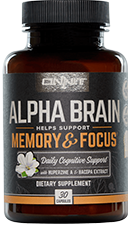
If you aren’t taking Alpha BRAIN®, you are operating at a disadvantage.
Find out why.
If you aren’t taking Alpha BRAIN®, you are operating at a disadvantage.
Find out why.
For a limited time, save up to 40% when you order a multipack of Hydracell by Well+.
CHECK AVAILABILITY

Secure Transaction