
HEALTHY AGING MAGAZINE
GET UP TO 40% OFF!
This is default text
My Husband Disappeared Across Eleven Years On A Pill His Cardiologist Prescribed In Ninety Seconds. I Got Him Back In Six Weeks.
I'm writing this from the kitchen table where I cried for six years thinking I'd lost him for good. He's at the workbench in the garage right now humming something. I can hear it through the door.
— Linda K., 58, Florida


Share this Article

Share this Article

Share this Article
The Sound I Hadn't Heard In Six Years
I am writing this on a Sunday morning in October.
My husband is in the garage. I can hear him through the kitchen door because he is humming something. Quietly. Half a song he used to know all the words to.
I have not heard him hum in six years.
I am 58 years old. My husband Tom is 64. We have been married for thirty-one years. We have two grown daughters and one grandson who is four.
For six years I thought I had lost the man I married.
I want to tell you what brought him back, because there is a woman reading this who is sitting at her kitchen table right now grieving a husband who is still alive in the next room. I was that woman for six years. I do not want to be the only one who knows what I now know.
This letter is for her.
If you are her husband — if you are the man on the statin, the one whose wife has stopped introducing you to new neighbors because she does not know which version of you will show up — I am writing this for you too. I am writing it the way I wish someone had written to my husband six years ago when there was still time to recover sooner.
Please read every word.
When I First Knew Something Was Wrong
Tom started atorvastatin in 2014. He was 53. Cholesterol of 234. His cardiologist wrote the prescription in ninety seconds at the end of his annual physical and said something about "preventive medicine."
Tom is — was — an electrical contractor. He ran his own small business for twenty-six years.
He was the kind of man who fixed things in our neighborhood for free because he could and because he wanted to. He wired our daughters' first apartments. He rebuilt my mother's kitchen the year she had her stroke. He had the kind of hands that could do anything and a brain that could solve any problem put in front of him.
The first sign was the dreaming.
About eight months into the prescription, I noticed Tom had stopped telling me his dreams at breakfast. He had been a vivid dreamer our entire marriage. He used to wake up and spend the first ten minutes of every morning telling me about the strange story his brain had built overnight.
One morning I realized he hadn't told me a dream in weeks.
I asked him. He thought about it. He said he didn't think he had dreamed in a while. He shrugged it off and went to work.
I did too. I was 51 then. I was working full-time as an elementary school assistant principal. We had teenagers. We had a business. We had life happening at us at full speed. Who has time to investigate the absence of dreams.
A year later he stopped laughing the way he used to.
Tom had a specific laugh — a real one, the kind that came from somewhere below his ribs. He'd had it since I met him at 26. It was the first thing I noticed about him.
It got smaller. Then it got polite. Then it stopped.
By year three he was emotionally flat in a way I could not name.
He was not depressed. He was not sad. He was just... less there.
Conversations that used to spark him no longer did. Movies that used to make him cry no longer did. Our grandson was born when he was at year four and Tom held that baby with what looked like tenderness from a distance — but I was watching him and I knew.
The man who had wept the first time he held our daughters was not present in the man holding our grandson.
Year five our older daughter pulled me aside at Thanksgiving and asked me if Dad was okay.
I lied to her.
I said he was just getting older.
I knew the answer. I had known for two years by then.
I had read about statin side effects. I had asked Tom's cardiologist about it at his follow-up. The cardiologist's eyes had glazed over the moment I said the word "personality." He told me Tom's labs looked great. He said personality changes were not a recognized side effect. He said if I was concerned I should consult a psychiatrist.
I went home and cried in the laundry room for an hour.
That was the moment I learned that Tom's cardiologist was not going to help me.
That was also the moment I started doing my own research, quietly, on my phone, in the bathroom, after Tom went to bed at 8:30 PM the way he had started doing at age 56.
What I Learned In Six Years Of Bathroom Research
Here is what I taught myself between year three and year nine of Tom's prescription.
I read for six years. I read pharmacology textbooks I bought used. I read peer-reviewed papers I downloaded through our daughter's college library account. I read patient testimonials on Reddit and watched YouTube lectures from cardiologists who treated statin side effects seriously instead of dismissing them. I read until I knew more about HMG-CoA reductase than the average primary care physician knows.
What I learned should be on the warning label of every statin bottle dispensed in this country.
The atorvastatin Tom took every morning works by blocking an enzyme called HMG-CoA reductase. Block it, lower the LDL number on the lab report. Simple.
Except that same enzyme produces CoQ10 — the molecule every cell in your body uses to make energy. Heart cells. Brain cells. Muscle cells. Block the cholesterol enzyme, you block CoQ10 production at the same time. CoQ10 drops 40% in the first thirty days on a statin. Over 50% in ninety.
This is not a side effect. This is the medication doing exactly what it was designed to do.
Every chemist who developed atorvastatin at Warner-Lambert in the 1980s knew this. Every chemist Pfizer inherited when they acquired Warner-Lambert in 2000 knew this. Every regulatory affairs specialist who walked the FDA approval through in 1996 knew this.
They sold it anyway.
Eleven billion dollars a year at peak. The most profitable drug in human history. A hundred and fifty billion dollars in lifetime revenue from Lipitor alone.
Built on a depletion mechanism every chemist on the project understood before the FDA approved a single tablet.
I learned all of this from textbooks and peer-reviewed papers I read on my phone in the bathroom while my husband slept.
The cardiologist who prescribed it to my husband never mentioned a single word of it.
The pharmacist who filled it every month never mentioned a word of it either.
The pamphlet that came with the prescription mentioned "muscle pain" as a possible rare side effect.
Nobody told me my husband would stop dreaming.

The Number That Made Me Cry On The Bathroom Floor
Sometime around year four, I found the number that broke me.
For statins in primary prevention — patients like Tom who had not yet had a cardiac event — the Number Needed to Treat to prevent one heart attack over five years is approximately 104.
Read that number twice.
One hundred and four people take atorvastatin every single morning for five years.
To prevent ONE heart attack.
The other one hundred and three take it every morning for five years and get nothing.
Zero cardiovascular benefit. Zero protective value. Zero reason to be on the medication at all.
But all one hundred and four absorb the depletion. The CoQ10 collapse. The muscle pain. The brain fog. The grip going. The forgetting of grandchildren's friends' names. The stopped dreaming.
A hundred and three husbands lost their muscles, their memory, their dreams, their wives' faces in the bathroom mirror at night — so that one of them maybe didn't have a heart attack he might not have had anyway.
I sat on the bathroom floor and cried when I found that number. Tom was asleep down the hall. He had been in bed since 8:30 PM. It was 11 PM.
I cried for the man I had married. I cried for the wife I had become. I cried for our grandson who was going to grow up not knowing the grandfather his mother had grown up with.
And then I got up off the bathroom floor and started looking for an answer that did not require me to walk into Tom's cardiologist's office and beg for permission to fight for my husband's mind.
That search took me two more years.
It ended in a Japanese research paper from 2007.
The Tokyo Paper I Read At 2 AM On A Tuesday
For the last fifteen years, Japanese researchers in Tokyo and a small group at Loma Linda University in California have been studying something more powerful than CoQ10 alone.
A molecule called molecular hydrogen — H₂. The smallest molecule on the periodic table. So small it crosses cell walls. So small it crosses the blood-brain barrier. So small it enters the mitochondria of every cell — the same mitochondria my husband's statin had been starving for nine years.
In May 2007, a Japanese research team published a paper in Nature Medicine — one of the most prestigious medical journals in existence — that quietly changed cellular biology.
Hydrogen does something nothing else does.
It selectively neutralizes only the most damaging type of free radicals — the ones that oxidize LDL into the sticky, plaque-forming kind that actually cause heart attacks. It leaves the helpful free radicals your body needs untouched. Vitamin C cannot do this. Vitamin E cannot. CoQ10 supplements cannot. Only molecular hydrogen.
It also activates a protein called Nrf2 — the master switch your body uses to turn on its own antioxidant production. Hydrogen does not replace antioxidants. It turns the factory back on.
Since 2007, more than 2,000 peer-reviewed studies. Over 100 clinical trials. The Japanese — who have the lowest rate of cardiovascular mortality in the developed world — have been studying this for two decades. The Americans — who consume more statins than any country on Earth — never picked it up.
I read that 2007 paper on my phone in the bathroom at 2 AM on a Tuesday in March.
Then I read three more papers from the next decade.
Then I cried again. Different kind of crying.
The next morning I ordered Hydracell.
The Forty-Three Days That Brought My Husband Back
I want to tell you about the forty-three days because I want you to understand what is possible if you act now instead of in another year.
Hydracell is made by a company called Well+. White box. No marketing fluff. Third-party tested at 12 parts per million of molecular hydrogen — the highest therapeutic concentration available without a prescription, four to six times what you'll find in cheaper hydrogen products that skip independent verification.
When the 3-pack arrived three days after I ordered it, there was a small printed booklet inside the box called The Bloodwork Decoder. Plain-English breakdown of every line on a lipid panel. Total cholesterol, LDL, HDL, triglycerides, ApoB, Lp(a), C-reactive protein. What the numbers actually mean. What questions to ask the cardiologist about each one.
I had spent six years teaching myself this information. The booklet covered most of what I had learned. Well+ throws it in a $39 box of supplements.
I read it that first night while Tom slept.
The next morning I poured Tom a glass of water. I dropped a Hydracell tablet in. It dissolved in 90 seconds. I handed him the glass.
He looked at me.
He said, "What is this?"
I said, "It's hydrogen water. I read about it. I want you to drink one a day for ninety days."
He said, "Why?"
I said, "Because I want my husband back."
He drank it.
He kept taking his atorvastatin every morning the way he always had. He did not stop. I did not tell him to stop. I am not a doctor and I would never ask him to. I just gave him a glass of water with a hydrogen tablet in it and asked him to drink it for ninety days alongside everything else his cardiologist had prescribed.
Week 2: He told me a dream. Just one. About fishing with his father, who had been dead for twelve years. He told it to me at breakfast on a Wednesday morning the way he used to tell me dreams every morning of our marriage. He did not realize he had done it. I left the kitchen and cried in the bathroom for the second time that month, but for a completely different reason.
Week 3: He laughed at something our grandson did on FaceTime. Not the polite laugh. The real one. The one from below his ribs. The one I had not heard in six years. I had to leave the room.
Week 4: I caught him humming. He was changing a lightbulb in the hallway. He was humming a song he used to know all the words to. He stopped when he saw me looking. He said, "What?" I said, "Nothing." I went back to the kitchen and stood at the sink with my hand over my mouth.
Week 6: Tom told me at dinner that he felt like himself again. He said it was the first time in years he had been able to say that. He said the brain fog had lifted. He said his afternoons no longer required a nap. He said his hands felt like his hands again — he had taken the screws out of the kitchen cabinet hinges that morning to fix a door that had been crooked for two years and the screws had come out of the wood in his fingers like they used to.
Day 91: He went in for routine bloodwork.
Three days later his cardiologist's office called and asked him to come in. He had the labs printed out in front of him.
The cardiologist looked at Tom for a long moment before he spoke.
"Tom — these numbers are better than I've ever seen on you."
Total cholesterol: 234 → 198. Down 36 points. LDL: 156 → 132. Down 24. Triglycerides: 187 → 134. Down 53. HDL: 41 → 47. Up. The protective cholesterol that nine years of atorvastatin had never moved a single point. C-reactive protein down by more than half.
Tom told him. He had been taking the statin every morning. He had also been drinking a glass of hydrogen water every morning for the ninety days before the test.
The cardiologist was quiet for a long time.
Then he said, "Tom — I want to be honest. I haven't seen this on hydrogen before. I don't know what to make of it. But these are real numbers. I'd like to see another panel in three months. If they're holding, we're going to have a conversation about whether we can reduce the atorvastatin dose."
Tom drove home.
When he came in the kitchen door he pulled me into a hug and we stood in the kitchen for a long time.
He whispered, "Thank you."
I cried for the third time that month.
This time was the best one.
What I Want To Say To The Wife Reading This
If you are reading this at 11 PM on a Tuesday with your husband asleep down the hall — if you have been doing the math on how long it has been since he laughed the real laugh, since he told you a dream, since he held your face the way he used to — you are not crazy. You are not imagining it. You are not catastrophizing.
You are seeing what every cardiologist's eyes glaze over when you try to describe.
The man you married is still in there.
The depletion is real. The mechanism is documented in textbooks. The 104-to-1 trade-off is in the published literature. The 2007 Tokyo paper is real. The 2,000 studies since are real. The reason you have never heard about any of it is that nobody is paid to tell you.
Pfizer is not paid to tell you their drug depletes the molecule your husband's mitochondria need to function.
Merck is not paid to tell you they patented the combination drug that would have prevented this and never brought it to market.
The cardiologist is not paid to spend more than fifteen minutes per appointment.
The pharmacist is not paid to mention any of it when he hands you the bottle.
I am not paid to tell you any of this either. I am writing this on a Sunday morning at my kitchen table because my husband is humming in the garage for the first time in six years and I cannot keep what brought him back to myself.
If your husband is the man Tom was twelve months ago, you have two choices.
You can wait. The way I waited for six years thinking I had lost him for good. The way I waited until our daughter asked me at Thanksgiving if Dad was okay and I lied to her face.
Or you can pour him a glass of water with a hydrogen tablet in it tomorrow morning and ask him to drink it for ninety days alongside whatever else his cardiologist has prescribed. Tell him a 58-year-old wife in Florida wrote a letter about her husband and you wanted him to try it.
Tell him you want him back.
He will drink it.

A Note Before You Click
I called Well+ last week to order another 5-pack for our house. The woman on the phone told me they're a small operation — five people in Colorado, one product, made in small batches because the third-party 12 PPM testing on every lot takes time and they refuse to ship inventory that hasn't cleared independent verification.
She apologized that the 5-pack was on a 4-day delay because a recent lot had been held back for re-testing.
I told her I had spent six years buying supplements from companies that cut every corner imaginable and she was the first person I had ever spoken to at a supplement company who apologized for refusing to.
The 3-pack (Buy 2, Get 1 Free) is currently $26 a pack with free shipping. The 5-pack (Buy 3, Get 2 Free) is $23.40 a pack with free expedited shipping. Both come with the Bloodwork Decoder I told you about, the Japanese Heart Protocol video course by Dr. Henry Foster, and the 90-Day Better Numbers Promise.
The promise is simple. Take Hydracell daily for 90 days. Get bloodwork done. Bring the results to the cardiologist. If the numbers haven't improved — total cholesterol, LDL, triglycerides, or inflammation markers — email Well+ and they'll refund every cent. Keep the packs. Keep the bonuses. No questions, no forms, no fine print.
The atorvastatin in your husband's medicine cabinet does not come with a money-back guarantee. Pfizer is not going to refund the years it took. Merck is not going to refund the patent that sat unreleased while your husband's CoQ10 ran out.
Well+ will.
That should tell you everything about who is confident in their product and who is just confident in their refill cycle.
Two Futures
The man I married is humming in the garage right now.
I waited six years to find what brought him back.
You do not have to wait six.
You can pour him the first glass tomorrow morning.
— Linda K., Florida
P.S. — In Case You're Wondering About Some Things
P.S. — "What if my husband won't try it?" Tell him a wife wrote a letter and you want him to drink it for ninety days. That's it. He doesn't have to read this letter himself. He doesn't have to research anything. He just has to drink a glass of water in the morning. If after ninety days nothing has changed, you both stop. If something does change — and you'll both know if it does — you keep going.
P.P.S. — "What if my husband is on multiple medications?" Tom takes atorvastatin, lisinopril for his blood pressure, and a baby aspirin. Hydrogen is the smallest molecule on the periodic table — it doesn't compete for liver enzymes the way most supplements do. It doesn't interfere with drug metabolism. The 2007 Tokyo paper specifically noted this as part of why H2 is unusual. I'd still tell the cardiologist at the next appointment, the way you'd mention any supplement. There's no interaction profile to worry about.
P.P.P.S. — "How fast will I see something?" Week 2 was when Tom told me his first dream. Week 3 was the real laugh. Week 4 was the humming. Week 6 was when he told me at dinner that he felt like himself again. Day 91 was the bloodwork. Some men respond faster. Some respond slower — the woman in my walking group had her husband on Hydracell for nine weeks before she noticed his afternoon nap stopped happening. The 90-Day Better Numbers Promise exists because the bloodwork takes 90 days to show up. The body and personality changes happen in waves before that.
P.P.P.P.S. — "What if my husband has had a cardiac event already?" Tom hadn't had one — he was on atorvastatin for primary prevention, which is what about 70% of statin patients are on. If your husband has had a heart attack or has documented cardiac disease, that's secondary prevention and the math is different. Talk to the cardiologist before you change anything about his current regimen. Hydracell can still be added alongside the statin without conflict, but the conversation about reducing dose later should come from the cardiologist, not from a wife on the internet.
P.P.P.P.P.S. — Last thing. If you are the husband and you are reading this letter your wife forwarded to you — please drink the water. She is not asking you to stop your medication. She is not asking you to do anything except hold a glass for thirty seconds in the morning. Give her ninety days. Give yourself ninety days. The man she married is still in there. I'm writing this from a kitchen where mine just came home.
The man I married is humming in the garage right now.
I waited six years to find what brought him back.
You do not have to wait six.
You can pour him the first glass tomorrow morning.
— Linda K., Florida
Recent reviews:
"I'm 61. Ten years on Crestor. Three years feeling like a fog had moved in. My wife ordered Hydracell for me after she read a letter online. Five weeks in, the clarity came back. Brought the labs in last Tuesday — total cholesterol down 22 points. My cardiologist sat there staring at the page. I almost cried in his office. My wife already has been crying for a month." — Robert M., Ohio
"My husband's been on atorvastatin for fourteen years. He told me last week, 'I dreamed last night for the first time I can remember.' I had to leave the room because I couldn't stop crying. That's all I needed to know. I'm ordering the 5-pack." — Joanne K., Florida
"I'm a chemist. My wife handed me a print-out of an advertorial and asked me to read the actual papers before I dismissed it. Tokyo 2007, Song 2013, the 2023 meta-analysis — they're real. Tried regular CoQ10 for two years — helped some, never enough. Hydracell took six weeks before the energy came back, but the 90-day bloodwork was what convinced me — LDL down 28 points. The 12 PPM concentration is what makes the molecular hydrogen actually cross into the cell. Cheaper hydrogen products don't get there." — David T., Pennsylvania
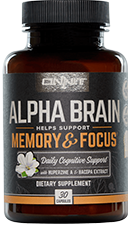
If you aren’t taking Alpha BRAIN®, you are operating at a disadvantage.
Find out why.
If you aren’t taking Alpha BRAIN®, you are operating at a disadvantage.
Find out why.

Restore your Energy with Hydracell
Click below to see if Well+ is still offering 40% savings and free shipping
ORDER HYDRACELL

For a limited time, save up to 40% when you order a multipack of Hydracell by Well+.
CHECK AVAILABILITY

Secure Transaction